A Common Financial Myth
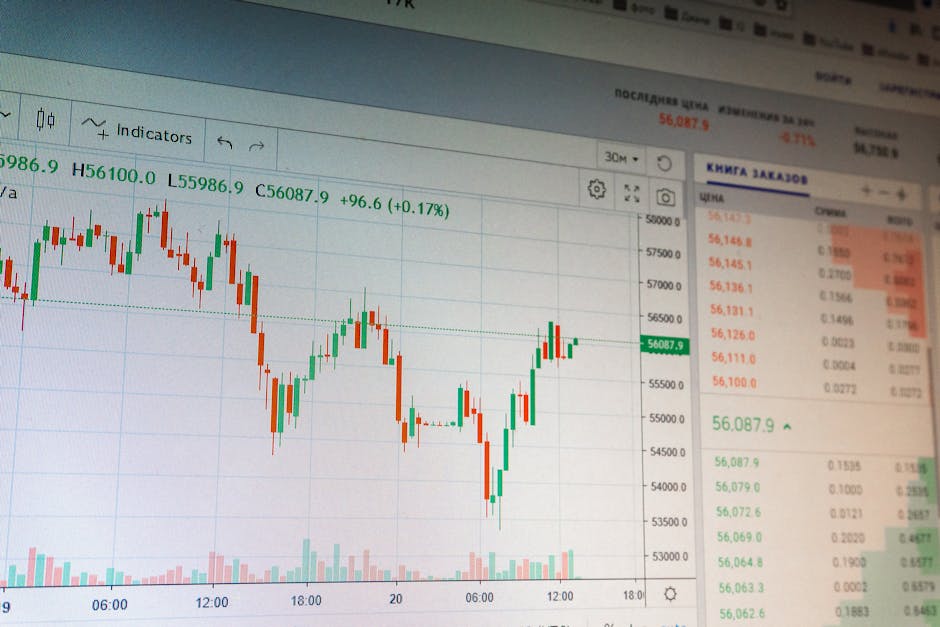
In the crypto market, a claim circulates constantly: "Bitcoin rose thousands of times over in a decade, so if you don't go all in now, you'll miss the boat forever." This argument sounds reasonable on the surface, but it conceals a fundamental misunderstanding of how markets work. Many people linearly extrapolate past returns, assuming the future will inevitably replicate past growth trajectories—while forgetting that markets never move in one direction. Statistically, single-day drops of more than twenty percent are not uncommon in crypto. In 2022 alone, total market capitalization evaporated by over two trillion dollars. That kind of volatility is more than most people can stomach.
The core of this myth lies in confusing "possible" with "inevitable." Past returns don't guarantee future performance, and they certainly don't mean everyone can enter the market at the same time and hold until the peak. Most people make investment decisions driven by emotion, often jumping in at the most euphoric moment and becoming the last ones holding the bag. This behavior pattern isn't a personal character flaw—it's a universal tendency of the human cognitive system.
The Logical Gaps Behind It
The first logical gap is treating Bitcoin's individual return as the average performance of the entire market. As the first cryptocurrency, Bitcoin benefits from network effects and first-mover advantage, but thousands of crypto assets in the market don't all share the same growth potential. Research shows that more than ninety percent of tokens launched during the 2017 peak are now trading below their issue price. Investors who base decisions on a handful of success stories are effectively using selection bias to guide their financial behavior.
The second gap is ignoring liquidity risk and psychological tolerance. When an asset drops thirty to fifty percent in the short term, most people face enormous psychological pressure and may capitulate at the bottom rather than wait patiently for recovery. Behavioral finance research indicates that the pain of losses is more than twice the pleasure of equivalent gains. This asymmetric emotional response leads to the tragic outcome of "buy high, sell low."
The third gap is a misunderstanding of asset allocation. Going all in means pouring nearly all your capital into a single position, which directly conflicts with a basic principle of investing—diversification. Any claim that anyone can predict the short-term movement of a single asset falls apart under rigorous academic scrutiny. Markets are full of randomness, and short-term price moves often have no direct connection to fundamentals.
How I Actually Think About It
From a financial planning perspective, every investment decision should first answer a fundamental question: "If I lost this money entirely, would it affect my basic living?" If the answer is yes, then this money should never be put into high-risk assets under any circumstances. Emergency reserves, short-term essential expenses, mortgage payments, or children's education funds—any money with a clear purpose and time constraint—must be managed strictly separate from capital seeking returns.
Second, risk tolerance isn't a fixed number. It's a variable that shifts dynamically with age, income stability, family obligations, and market conditions. A level of volatility you can handle at thirty may not be appropriate at forty or fifty. Many people become overconfident during peak earning years, underestimating the risk that future cash flow might shrink, only to discover their assets are trapped in an illiquid market precisely when they need the money.
Finally, investing should be a continuous system, not a one-time gamble. Regularly reviewing your portfolio, adjusting allocation according to your life stage, and staying alert when the market overheats—these disciplines are more important and practical than picking "the next Bitcoin." What most people lack isn't an opportunity to get rich quick; it's the patience and methodology to build a sound financial structure.
Building the Right Framework
The first step in building a sound risk-awareness framework is clarifying your investment goals and time horizon. Money earmarked for different purposes should follow different allocation logic. Retirement savings and speculative capital are fundamentally two different financial behaviors and shouldn't be conflated. When the goal is long-term capital growth, you can allocate moderately to high-risk assets, but the proportion should match your overall financial situation and time frame.
The second step is understanding and accepting that volatility is an inherent property of an asset, not an anomaly to be eliminated. Crypto's volatility is far higher than stocks or bonds, meaning its price will swing dramatically in short periods. This isn't a defect—it's a feature. Before entering, investors must ask themselves: "Can I watch my account show a forty percent loss for six straight months and not sell?" If the answer is uncertain, you should lower your allocation or rethink how you participate.
The third step is cultivating independent thinking while building the habit of seeking professional advice. In an era of information overload, the internet is flooded with price calls, predictions, and rags-to-riches stories. But truly valuable financial decisions come from a deep understanding of your own situation, not from someone else's profit record. The value of a financial planner or independent advisor lies in helping investors see the blind spots they may have missed—not in providing absolute answers.
The fourth step is building the discipline of diversified allocation and rebalancing. Even if you decide to participate in the crypto market, you should treat it as a small slice of your overall portfolio, not the whole pie. Meanwhile, regularly restoring your asset allocation to its target ratio forces you to sell high and buy low, which over time helps reduce the overall volatility of your portfolio.
Malkiel, author of A Random Walk Down Wall Street, put it well: "The key to investment success isn't finding the best asset—it's having a discipline and framework that fits you, and executing it over the long term." Most people fail in the market not because they aren't smart enough, but because they lack systematic risk management and self-restraint.